


At the beginning of 2026, I got seriously stuck at 899 subscribers. I tried everything that had reliably worked for me before - daily notes, boosts, comments.
And sometimes 2–3 new subscribers would arrive, but then someone from my existing audience would leave.
My page became almost invisible, like in the very early days.
Open rates dropped.
Comments dried up.
This went on for nearly 2 months, and I started to feel like this was my ceiling.
But then, literally in a single day, more than 200 subscribers came to me. I finally crossed the coveted 1,000-subscriber mark.
And the account continues to grow even now. New readers come every day.
Here’s exactly what happened and what finally worked.
This Post Is For You If:
You’re stuck at the same subscriber number and can’t figure out how to break through.
You’re showing up consistently - posting, commenting, boosting - but your subscriber count refuses to budge.
Or worse: new people arrive, others leave, and you’re stuck watching the same number stare back at you for weeks.
Why I Fell Off the Algorithm’s Radar
During the Christmas holidays, I was completely immersed in family life and barely published any notes, leaving only posts. So the plateau was quite predictable. If you don’t show up on Substack regularly, the algorithms stop showing you.
So if growth matters to you and you’re planning time off, schedule your posts and notes in advance so publications don’t stop. Back in December 2025 there was no way to schedule notes, but that feature exists now.
This had happened to me before, and I usually got out of it within a week through daily notes and boosts. But this time, nothing was working. My notes barely got 10–15 likes.
I started posting more frequently and instead of gaining subscribers, I got hit with unsubscribes. That started to frighten me. I felt I had completely lost touch with my readers.
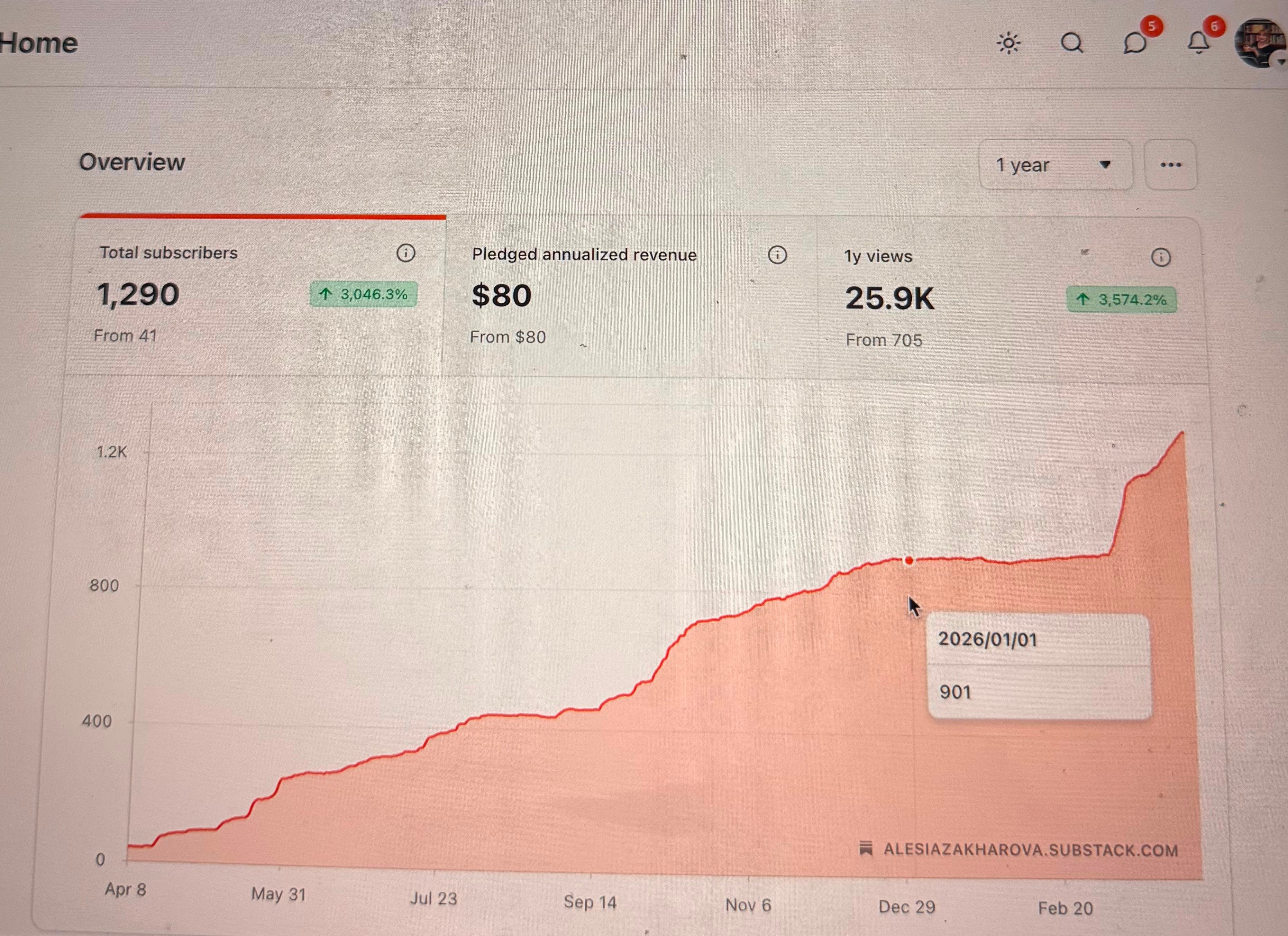
I soon learned I wasn’t alone. Many authors were experiencing the same slump, linked to changes in Substack’s algorithm. I also discovered that the 900–1,000 subscriber stage is one of the hardest, many people stall here, because growth at this level requires a completely different approach than what worked at the beginning.
So I decided to stop guessing and get systematic.
What Claude Told Me to Do (And Why It Surprised Me)
So, I began trying new-to-me methods:
Entered a collaboration and co-wrote a post with William Leroux. (By the way, we ended up with a great post. If you’re interested in productivity, check it out. i’ll be glad if you find it helpful)
Engaged more: reading and commenting on other authors’ posts.
Continued publishing notes daily and participating in boosts.

There was some movement in the account, but subscriber numbers weren’t changing significantly. Unsubscribes continued.
I was already planning to consult a professional Substack growth mentor, but first decided to consult Claude and also run an experiment to see how well its advice would work in practice.
I described my problem and uploaded all my key metrics from the past two months. Among other suggestions, Claude recommended something that feels completely counterintuitive: reduce your activity.
Keep engaging with other authors, commenting, collaborating but post notes and articles less frequently. No more than once a week. This gives the algorithm a chance to rediscover you before you overwhelm it.
I’m not sure I would have tried this on my own, every other expert was recommending more posting. But at that moment, I had to travel to help my daughter settle into university. So I scheduled posts for two weeks and let them run on autopilot.
I didn’t post any notes, barely checked Substack, and spent my time enjoying the beautiful city of Brisbane.
Here’s What Finally Broke the Plateau
The strategy worked. Unsubscribes stopped. New subscribers arrived at 1–2 per day. When I returned, I had 911 subscribers instead of 899. Small, but it felt like breathing again. I came back rested, with fresh eyes and real enthusiasm.
I did a quick audit of my account, my posts and notes, with Claude, which helped me sharpen my positioning. Based on that, again with Claude’s assistance, I built a notes system for the ongoing development of my Substack.
37,014 Impressions. 274 New Subscribers. One Note.
I went back to posting notes and this time, they got more views.
I followed the note system I’d been developing and refining over a full year of running this publication. Within a week, one of them took off like never before.
At the time of writing: 37,014 impressions. 2,5K likes. 378 comments. 274 new subscribers in two weeks.
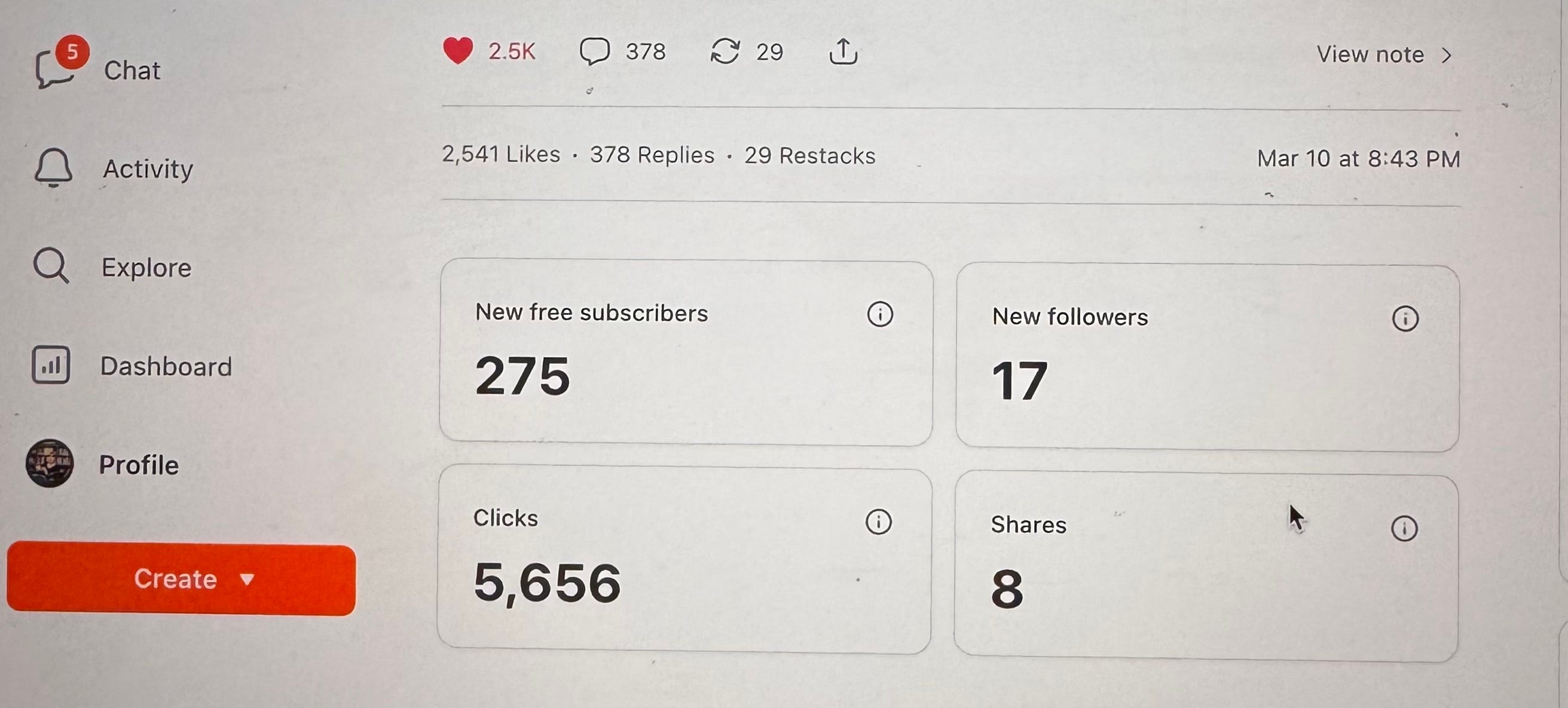
But the biggest shift wasn’t the numbers on that one note. It’s that all my content became more visible. Every note since then has been getting 100+ likes instead of 10–20.
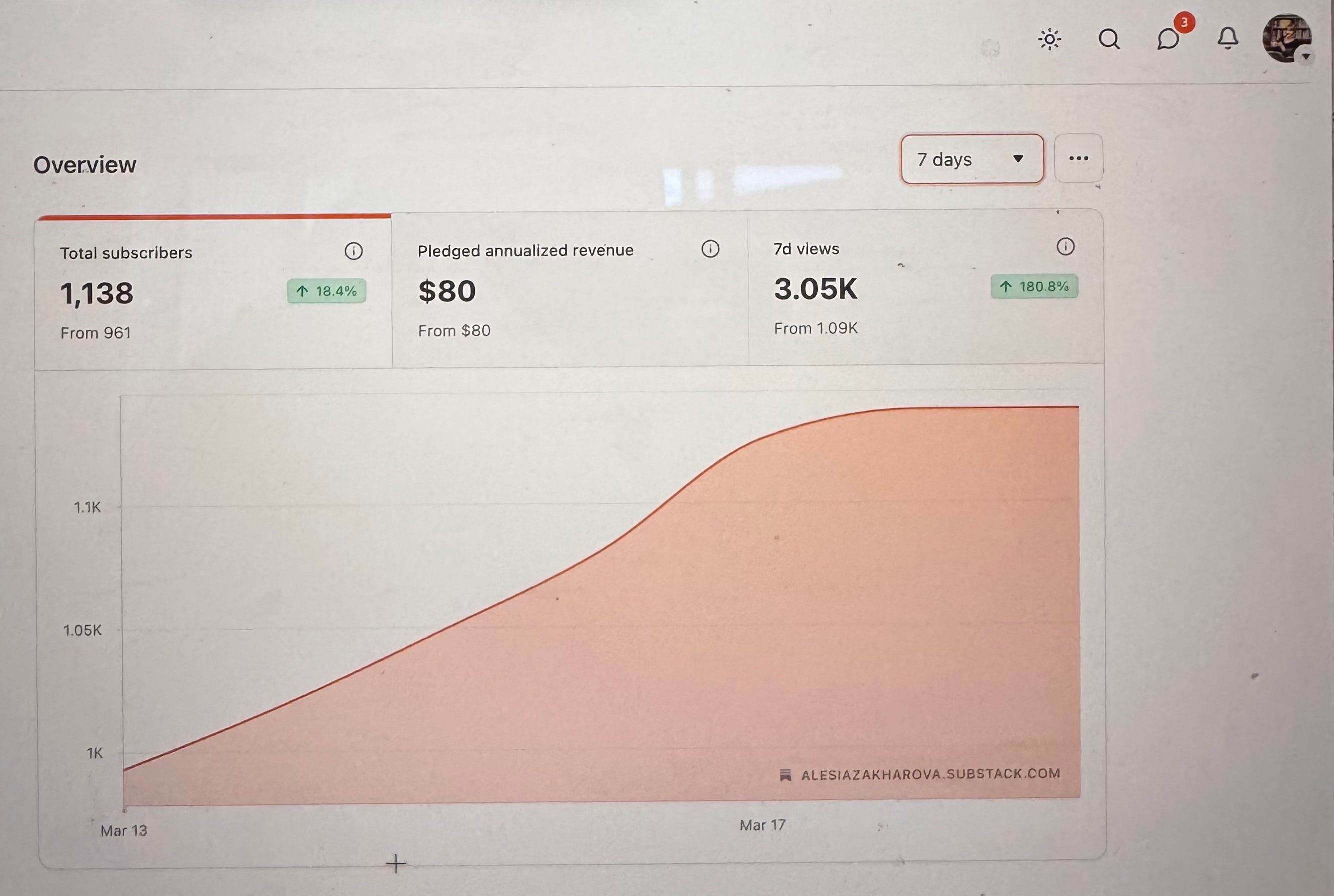
People are reading my posts again, amazing though-provoking discussions are popping up in the comments. My account is coming back to life!
How to Break Out of Your Plateau: What Actually Works
So if you too are stuck and your content has stopped being visible, be sure that you can get out of this slump. But it takes effort. Here’s what I recommend:
Stop and take a breath. Your mental state matters more than you think. Do whatever fills you back up.
Audit your Substack notes. Figure out what’s actually not working — not what you assume isn’t working.
Build a content plan from what you find.
Publish 2 notes per day, mixing different types and different formats. Remember, notes aren’t mini-posts. They’re coffee talks. Their whole purpose is simply to let people discover you.
How To Audit Your Substack Notes
If you’re serious about growing your Substack and turning your writing into income, you can audit your Substack notes today — and walk away with a notes system that actually brings new engaged subscribers. In just 30 minutes.
That’s exactly why I built The Substack Notes Engine Playbook — a pack of AI prompts for a full Substack Notes audit.
Adaptive14 prompts with step-by-step frameworks that will help you quickly identify why your notes don’t work and how to fix it.
No technical skills required. Just the free version of any AI tool: Claude, ChatGPT, or Perplexity.
This AI prompts pack includes:
Step-by step instructions on how to collect information both manually and automatically using AI
Prompts for Express Audit why your Notes Aren’t Getting Engagement
Prompts for Competitor Comparison
Deep-Dive Analysis Prompts: A Full Picture of What's Working and Why
Ready-to-use swipe file with my 30+ best-performing Substack notes, including the notes that each brought me between 100–200 new subscribers, complete with data (impressions, likes, and exactly how many subscribers each one drove). Each note is organized by type, so you can use them for inspiration or direct comparison analysis.
Here’s what changes on your Substack after you apply this playbook:
Your notes start getting more likes — not occasionally, but consistently, week after week, as you refine your formula based on real data rather than guesswork.
New subscribers arrive from your notes which become your main growth engine.
Your posts get higher open rates — because the readers your notes attract are genuinely interested in what you write, not random passersby.
Comments start appearing under your notes and posts. Real conversations, not silence.
You stop losing subscribers. When your notes speak to the right people, the wrong audience stops subscribing — and the right one stays.
And instead of spending an hour every morning wondering what to write, you sit down with a system, pick a note type, follow the structure, and publish in 15 minutes.
This system saved me 3-5 hours per week - time I now use for writing actual posts instead of stressing over notes.
Right now, you can get The Substack Notes Engine Playbook for $17.
Price goes to $34 in a week — grab it now.
With this playbook, you’ll find your true engaged audience — people who genuinely care about what you write. Get your first 1,000 subscribers!
Your Turn
Dear Substackers, if you’re stuck and don’t know how to break through, drop a comment. I read and respond to every one.
And I’m curious: do you use AI to help grow your Substack? Has it actually worked for you? I’d love to hear your experience.
I’m brand new here and learning how it all works so I found this very interesting.
Saving this post for when that inevitable plateau hits! I'm still very much early days yet, long way to go - but now I know what to do when the time is right! Thank you, Alesia =)